Bridges & Civil Infrastructure Inspections
Infrastructure & Utilities | Bridges & Civil Infrastructure Inspecting the structures that keep Britain connected.…
Environmental | Water Monitoring
From wastewater outfalls and rivers
to reservoirs and coastal waters,
understanding water quality is essential
for protecting the environment.
But reaching the right sampling location
is not always straightforward.
Specialist drones equipped with water
sampling systems are changing how
environmental teams collect information,
opening new possibilities for pollution
monitoring, scientific research and
water management.
Water quality monitoring requires more
than collecting a bottle of water.
Investigators must determine where
to sample, what to test for and how
the results will be used.
Sampling locations may be positioned
beyond safe shoreline access, close
to industrial outfalls or across
large bodies of water.
Conventional collection can involve
boats, specialist equipment or
personnel working near potentially
hazardous environments.
Drones offer another method of
reaching selected sampling locations.
With suitable equipment and
procedures, they can support the
collection of water samples for
environmental analysis without
personnel having to enter the water.
Questions That Matter
Collect samples to investigate
nutrients, chemicals, suspended
solids or other relevant
water-quality indicators.
Sample selected positions near
discharge points, upstream and
downstream, or across receiving
waters.
Repeat sampling at documented
locations to support comparisons
over time.
Reduce the need to enter deep
water, unstable banks or
potentially contaminated areas.
Drone Applications
Drone-based water monitoring is being
used and investigated across freshwater,
wastewater and marine environments.
Different payloads allow operators
to collect samples, inspect infrastructure
or deploy suitable monitoring sensors.
Drones can visually inspect treatment
lagoons, settlement ponds, outfalls
and associated infrastructure.
Sampling-equipped aircraft can also
collect water from suitable locations
in receiving waters, supporting
investigations into discharge
conditions and environmental impact.
Sampling at selected locations
upstream and downstream of a suspected
pollution source can contribute to
investigations into changes in
water quality. Drone collection may
help reach areas where steep banks,
strong currents or difficult terrain
restrict conventional access.
Specialist drones can support water
collection at selected coastal
positions, including waters near
discharge outlets and locations
beyond convenient shore access.
Laboratory analysis can then help
investigate nutrients, contaminants
and other relevant parameters.
Research teams use drones to assist
with freshwater sampling, ecological
monitoring and environmental DNA
collection. Depending on the equipment,
samples can be collected at the
surface or from selected depths
to investigate changing conditions.
From Collection to Analysis
A drone does not need to analyse
pollution itself to contribute
to environmental monitoring.
Its value may lie in obtaining
a suitable water sample from
a carefully selected location.
Establish sampling positions,
target depths, sample volumes
and the parameters requiring
investigation.
A purpose-designed sampling bottle
or collection device is deployed
into the water using a compatible
aircraft and payload system.
Samples are appropriately handled,
preserved where necessary and
analysed using suitable laboratory
methods or validated equipment.
Specialist aircraft and sampling
equipment are now being used to
support water monitoring in
freshwater and marine environments.
Enterprise platforms:
Aircraft such as the DJI Matrice 400
offer a payload capacity of up to
6 kg under specified conditions.
Compatible third-party systems can
enable functions such as the
deployment of sampling containers.
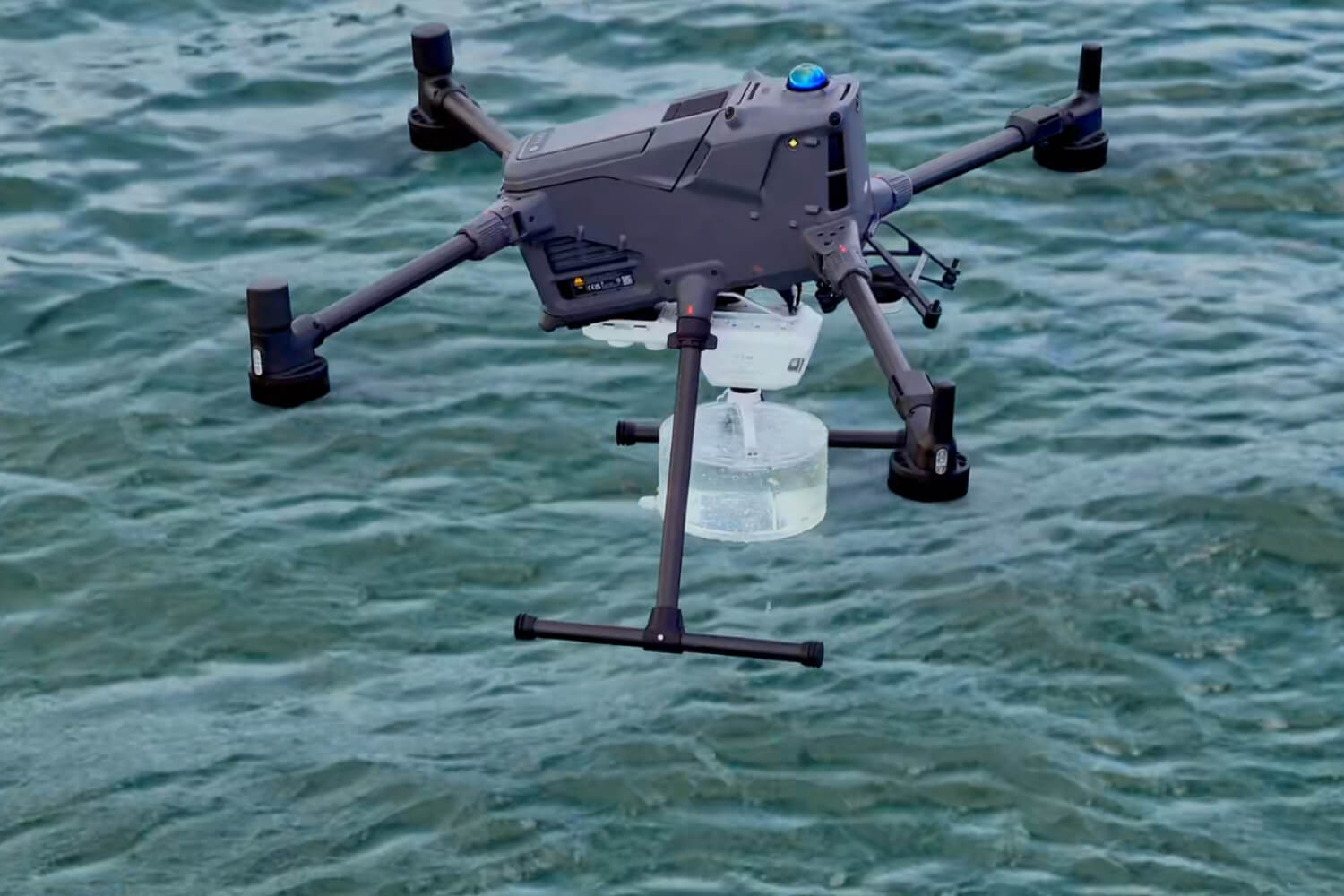
Waterproof sampling drones:
Platforms such as the SwellPro
SplashDrone 4 and FD3 are designed
for operation around water and
can be equipped with specialist
collection systems.
Some systems are designed to
retrieve surface samples, while
others use depth-controlled
containers to collect water from
selected levels.
Examples of documented applications
include freshwater environmental
DNA research in Sweden, dissolved
oxygen monitoring in France and
marine environmental DNA sampling
near Madeira.
These are industry applications,
not Iprosurv case studies.
Payload compatibility and
operating limitations must
be confirmed for each system.
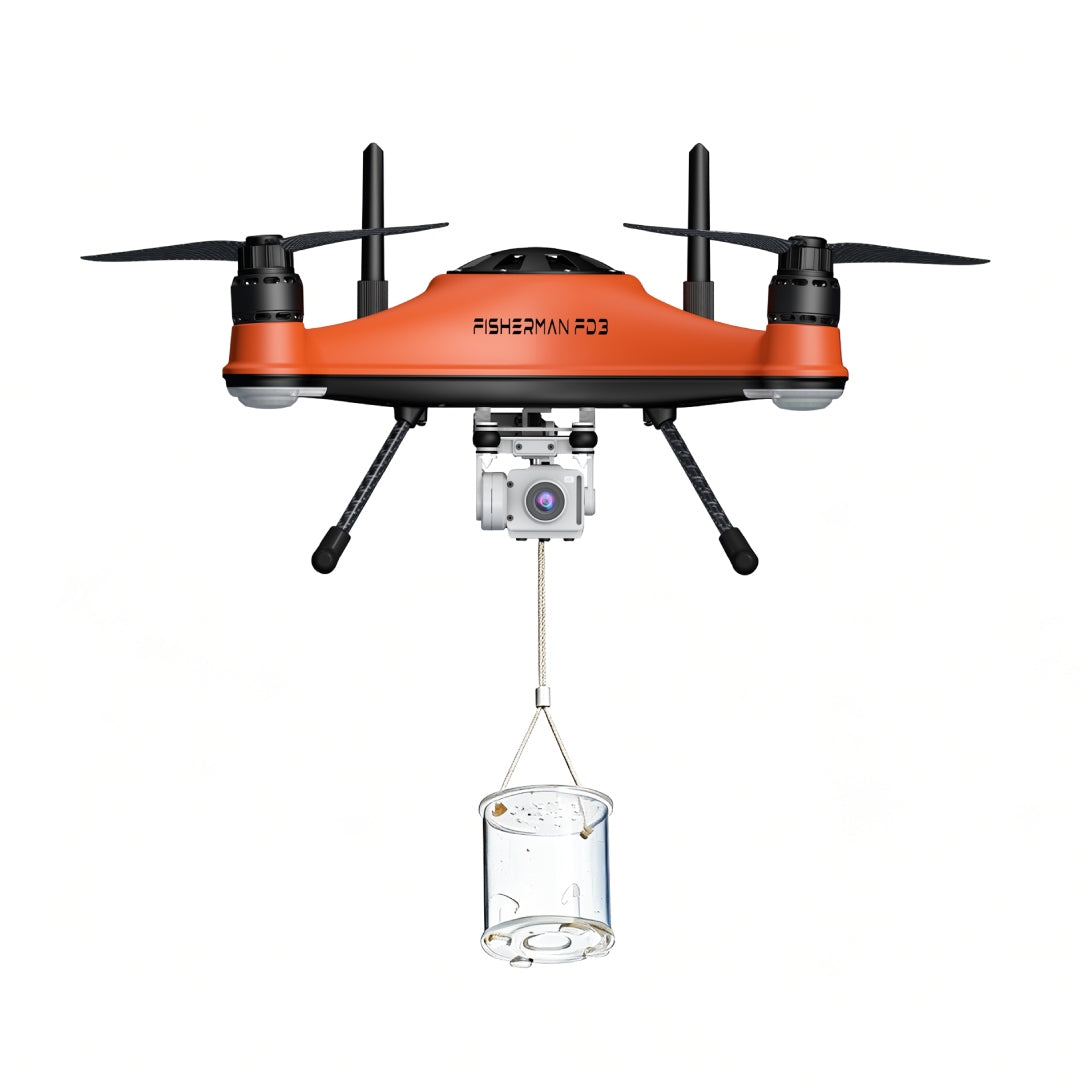
Example of a purpose-built waterproof
water-sampling platform from SwellPro.
Why It Matters
Suitable drone systems can collect
water samples without requiring
teams to enter potentially hazardous
water or difficult access locations.
Collect information from selected
positions across rivers, lakes
or coastal waters where conventional
access could be impractical.
Documented sampling locations and
consistent procedures can contribute
to repeatable monitoring programmes
and comparisons over time.
Environmental monitoring demands
more than selecting an aircraft
with sufficient lifting capability.
The sampling method needs to produce
reliable information for the intended
investigation. That means considering
the required sampling depth,
container suitability, water movement,
contamination prevention and
the analytical process.
Operational factors also matter.
Wind, wave conditions, tides,
airspace restrictions, payload
behaviour and safe recovery
procedures can all influence
the feasibility of a mission.
In many cases, drones will complement
rather than replace established
boat-based, fixed-station or
manual sampling methods.
For organisations considering
adoption, understanding both the
technological possibilities and
practical limitations is essential.
Choose a system appropriate
to the environment, sample
volume and collection method.
Ensure collection procedures,
sample handling and analysis
meet the intended monitoring
requirements.
Consider airspace, aviation
authorisations, site access
and other relevant restrictions.
Develop the knowledge and
operational skills required
to use specialised aircraft
and collection equipment safely.
Discover What’s Possible
From sampling rivers and reservoirs
to supporting coastal research
and wastewater investigations,
drones are creating new opportunities
for environmental professionals.
If your organisation is exploring
drone technology, Iprosurv can
help you understand the options,
from aircraft and specialist
equipment to pilot training
and operational consultancy.
Whatever you need drones to do, there are three ways to work with Iprosurv.
Our pilots carry out the survey or inspection and deliver the data and reports you need.
Accredited courses that give you and your team the skills to fly safely and legally.
The drones, sensors and software to run your own operations, with expert advice.
Tell us what you are trying to achieve and we will recommend the right service, training or equipment.