
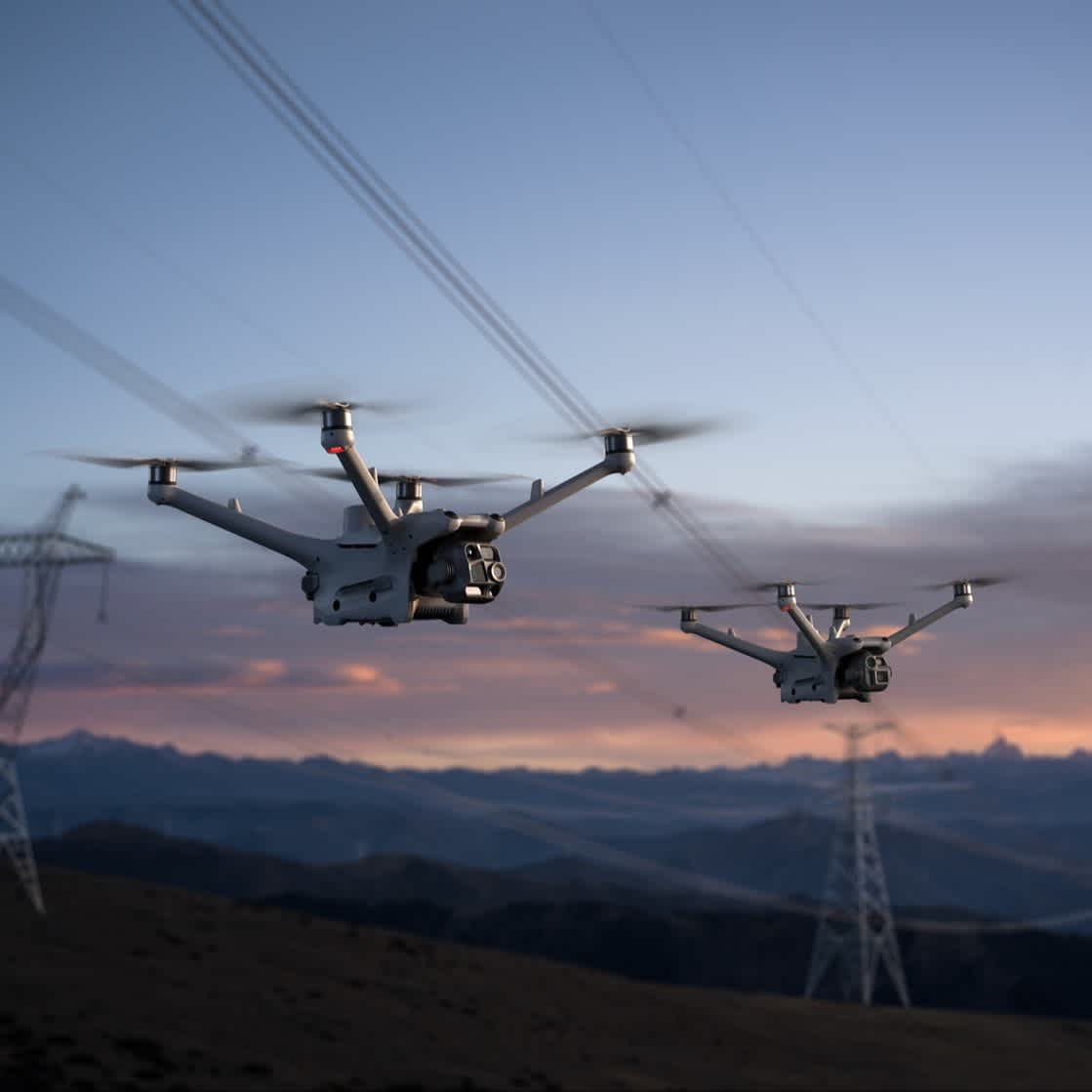
Ask us about this product, bundles, or which equipment suits your job.


DJI Matrice 4TD · Thermal inspection and operational awareness
An unusual heat pattern. A visible change in an asset. A scene your team needs to understand. Bring complementary views together before deciding what to investigate next.
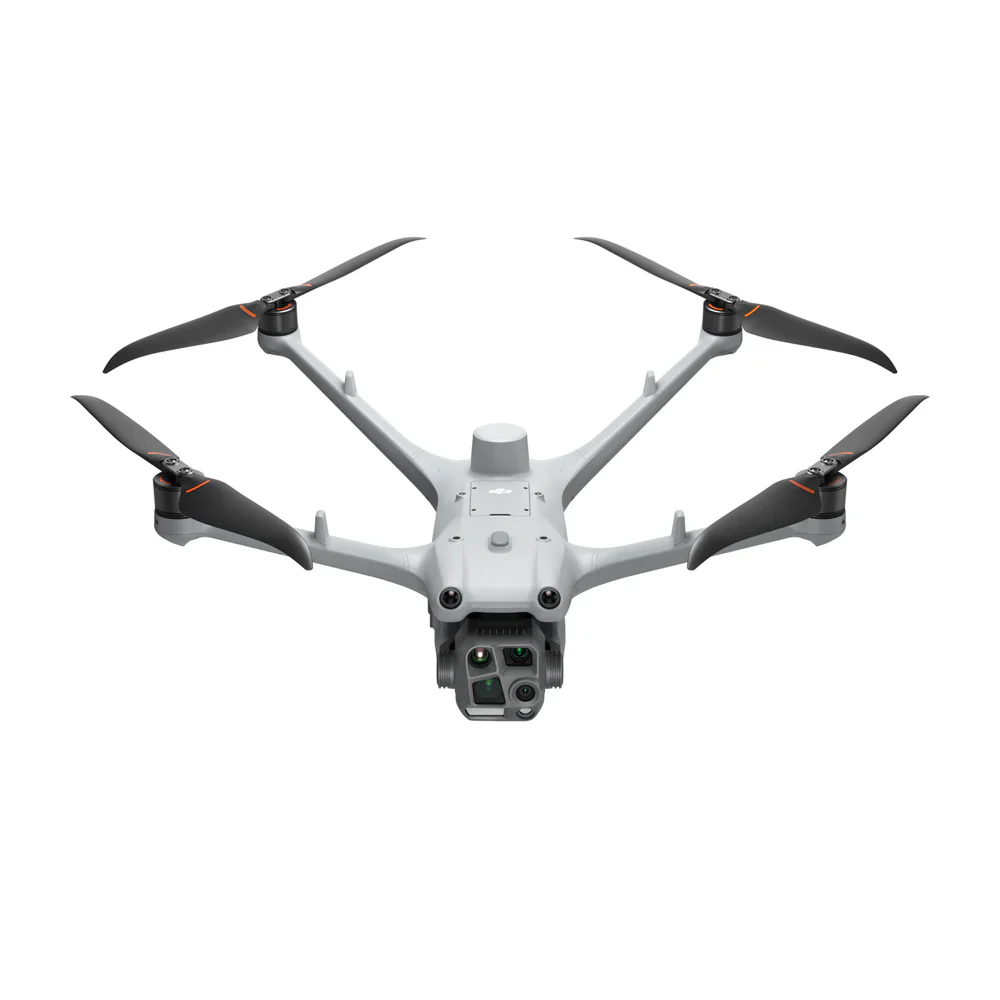
The DJI Matrice 4TD combines thermal imaging, three visual cameras and laser rangefinding with a non-folding, IP55-rated airframe. Use it with a compatible controller for field operations, or consider a separate DJI Dock 3 deployment for planned, repeat site work.

Thermal evidence with visual context
A thermal image can reveal apparent temperature differences across visible surfaces. A normal photograph helps the reviewer understand the asset, its condition and where that pattern occurs.
The Matrice 4TD's thermal sensor has a native resolution of 640 × 512. UHR Infrared Image mode produces enhanced 1280 × 1024 output. That is enhanced imagery, not a higher native detector resolution.
Spot and area measurement tools support review, but an apparent anomaly does not establish its cause. Material properties, reflections, viewing angle and environmental conditions all affect interpretation.
A fixed-arm aircraft with deployment choices
The Matrice 4TD can link with DJI RC Plus 2 Enterprise for standalone flight. Teams can manage the aircraft and capture directly when visiting different locations.
For regular work at a defined site, DJI Dock 3 provides a separate deployment route. Consider the site, communications, support and operating requirements before selecting the full system.
The upturned arms do not fold for transport. Allow for the aircraft's full dimensions when planning your case, vehicle space and setup area. A Dock is not required for standalone operation and is not assumed to be included.
Where could it support your team?
Collect thermal patterns alongside visual records of accessible equipment. Give an appropriately qualified specialist evidence to review and help prioritise closer examination.
Investigate apparent temperature differences across visible surfaces. Combine the imagery with site knowledge to support a structured assessment and identify further checks.
Record thermal variation and visible panel condition. Plan capture around suitable operating and environmental conditions, then assess findings within your inspection methodology.
Connect a wider asset view with closer photographs of visible features. Plan viewing angles and coverage around the structure and the information its specialist needs.
Add thermal and visual observations to a team's understanding of the scene. Useful detection depends on contrast, coverage and obstructions; it cannot be guaranteed.
Build a dated record of observations over time. Record settings and conditions so reviewers can assess whether a change comes from the asset or the capture.
More than a thermal view
The wide, medium telephoto and telephoto cameras help you document an asset at different scales. Keep enough context in the record for someone else to understand the location of each closer observation.
An integrated laser rangefinder adds target-distance information. Near-infrared illumination and night imaging functions support lower-light observation; near-infrared lighting is separate from thermal imaging.
Integrated RTK can refine aircraft positioning when suitable corrections are available. It does not, by itself, guarantee the accuracy of a mapped finding or finished measurement.
Prepare for the working day
IP55 adds environmental protection to the aircraft. It does not mean waterproof or unrestricted poor-weather operation. Equipment condition, installation and DJI's operating limits remain relevant.
Use Matrice 4D Series batteries and compatible charging equipment. Allow for reserves, accessories and site conditions when planning each visit, rather than relying on the maximum test endurance.
Vision and downward infrared sensing support awareness. Assess the site and obstacles yourself, particularly when working around structures, changing light or complex backgrounds.
From observation to a useful handover
Collect thermal observations, supporting photographs and notes about the asset and conditions.
Identify the asset and observation location clearly so a reviewer can understand the finding.
Use appropriate thermal analysis tools and specialist judgement to examine apparent anomalies.
Provide images, locations and limitations in a format that helps the team plan further action.
DJI Pilot 2 supports compatible controller-based missions. For thermal analysis, retain supported radiometric files so temperature information remains available to suitable analysis tools, rather than relying only on screenshots.
FlightHub 2 supports compatible cloud and Dock workflows. Confirm its features, subscriptions and data arrangements for your organisation. Processing tools, paid services and training are included only where stated in your selected package.
Equipment, skills and practical advice
What will happen to the information after landing? Start there, then select the aircraft, capture process and skills that support the decision.
Based in Rotherham and working across the UK and Europe, Iprosurv brings together equipment supply, drone operations and practical training. Tell us about your assets, existing experience and who will interpret the findings.
We can discuss pilot development and application familiarisation, with practical training at our Dearne Valley College location and its dedicated practice area where appropriate. Training is arranged separately unless included in your agreed package.
Configure the complete setup
Ask us to confirm the aircraft, compatible controller, battery quantities, charging equipment and case. Any DJI Care, warranty service, software or training should be identified in your quotation.
For a Dock project, request a separate configuration covering the Dock, installation requirements and supporting services.
The details behind the decision
*54-minute test: constant 12 m/s flight, no wind, 20 m above sea level, photo mode without capture, obstacle avoidance off, from 100% to 0% battery. This is a test configuration, not a recommended mission setup; allow return and landing reserves. Laser performance depends on the target and conditions.
*IP55 is a laboratory-tested protection rating, not waterproofing. Protection can reduce with wear and depends on correct installation and closed ports. Follow DJI's weather, battery and maintenance instructions. Thermal interpretation requires suitable conditions and settings.
Read DJI's complete specifications, selecting the Matrice 4TD entries
No. It can link with DJI RC Plus 2 Enterprise for standalone flight. Confirm the controller, batteries and charging equipment in your selected package.
The native detector is 640 × 512. UHR mode produces enhanced 1280 × 1024 output. The enhanced figure should not be described as native sensor resolution.
Thermal imagery can guide an investigation, but it does not establish a cause by itself. Combine the imagery with asset knowledge, capture conditions and review by an appropriately qualified person.
No. Equipment condition and DJI's operating limits still apply. Assess the weather, visibility and task before flying, and follow the installation and maintenance guidance.
Only where the selected package expressly includes them. Your quotation and order confirmation should identify the supplied items, service entitlements and any training.
Start with the information you need
Tell us about your assets or scenes, the conditions you expect and how the findings will be used. We will help you assess the Matrice 4TD and discuss deployment, equipment, software and training around your operation.
Speak to Iprosurv about the Matrice 4TDCombine thermal imaging and detailed visual inspection with the DJI Matrice 4TD. Its native 640 × 512 thermal sensor, three 48 MP visual cameras and laser rangefinder sit within a fixed-arm, IP55-rated airframe. Speak to Iprosurv about standalone operation, optional Dock 3 deployment and training for your team.
£6,437.50 ex VAT
Ask us about this product, bundles, or which equipment suits your job.
We can train you to use it, or carry out the work for you.