
CONFINED SPACE INSPECTION |
CRITICAL INFRASTRUCTURE
750 Metres in Just Over 15 Minutes: How Drones Are Transforming Confined Space Inspections
Inspecting the inside of a long penstock or concrete culvert presents significant challenges. Restricted access, limited lighting, difficult communications and the hazards associated with confined-space entry can make conventional inspections complex, time-consuming and costly.
Using the specialist Flybotix ASIO X, Iprosurv demonstrated how purpose-built drone technology can overcome many of these challenges, inspecting 750 metres of internal infrastructure in just over 15 minutes. The operation demonstrated the potential to collect detailed visual evidence while reducing the need for personnel to enter hazardous environments.
A 750-metre internal
inspection completed
in just over 15 minutes,
demonstrating how
specialist drone technology
can improve inspection
efficiency, reach
and personnel safety.
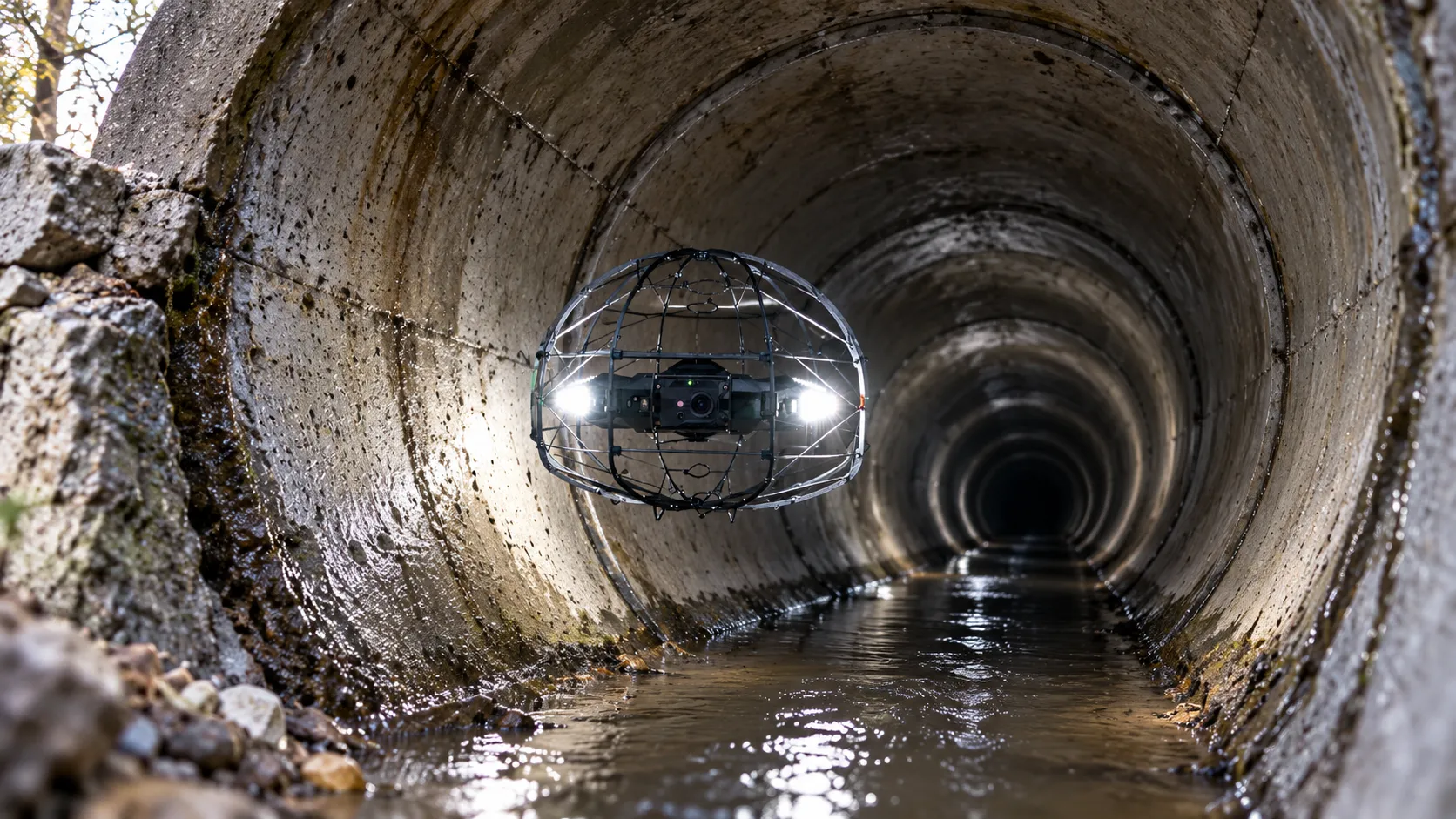
750 Metres of Internal Infrastructure. Just Over 15 Minutes.
THE CHALLENGE
Inspecting Long, Restricted Spaces
Inspecting internal infrastructure such as penstocks and concrete culverts presents significant access challenges. Confined-space hazards, restricted movement, limited visibility and difficult communications can make conventional inspections complex and resource-intensive. A safer, more efficient approach was required.
OUR SOLUTION
750 Metres Using the ASIO X
Iprosurv deployed the specialist Flybotix ASIO X to inspect 750 metres of internal infrastructure. Its protected aircraft design, onboard lighting and extended flight endurance made it suitable for visual inspection within a confined, GNSS-denied environment.
THE EVIDENCE
Internal Visibility Without Routine Entry
The drone enabled visual information to be gathered from inside the structure, providing a record of the surfaces and accessible features along the inspection route. This information could support subsequent engineering review and help identify locations requiring closer examination.
THE VALUE
Just Over 15 Minutes
The internal inspection was completed in just over 15 minutes, demonstrating the efficiency of specialist confined-space drone technology. The approach reduced the need for initial personnel entry, supported faster visual assessment and demonstrated opportunities to reduce inspection-related disruption.
03 | UNDERSTANDING THE CHALLENGE
750 Metres of Restricted Infrastructure. One Significant Inspection Challenge.
Inspecting penstocks, concrete culverts and other enclosed infrastructure presents significant challenges. Restricted access, poor visibility, limited communications and long internal distances can make conventional inspections complex, costly and potentially hazardous.
Personnel safety was the first consideration. Confined-space entry can expose inspection teams to hazardous atmospheres, water, restricted movement and difficult emergency access. Where physical entry is required, operations may need specialist personnel, isolation procedures, atmospheric monitoring and rescue arrangements.
The second challenge was inspection endurance. Covering 750 metres of internal infrastructure required a drone capable of travelling substantial distances while maintaining sufficient power for inspection lighting, visual recording and safe recovery.
Many internal inspection platforms are limited by battery capacity, particularly once lighting and continuous video inspection are factored in. In a long enclosed structure, short endurance can lead to repeated flights, extra downtime and a less efficient inspection process.
Operating conditions added further complexity. Without satellite positioning, the aircraft needed to operate reliably within an enclosed environment, accounting for restricted dimensions, potential communication limitations and internal obstacles.
The requirement was not simply to fly through the structure, but to gather useful visual evidence that could help engineers understand the condition of the asset and identify areas requiring closer review.
Iprosurv therefore needed a solution that combined extended flight endurance, controlled operation and effective visual inspection. The objective was to obtain meaningful evidence efficiently, reduce unnecessary personnel entry and support better-informed inspection decisions.
Specialist Drone Technology Designed to Go Where People Shouldn't Have To
The challenge required more than a conventional drone fitted with a camera. Inspecting 750 metres of enclosed infrastructure demanded an aircraft specifically suited to operating in confined, poorly lit environments where satellite positioning was unavailable.
Iprosurv selected the Flybotix ASIO X, a specialist internal inspection drone designed to operate in challenging industrial environments. Its protected aircraft design, onboard inspection lighting and extended flight endurance made it well suited to the task.
The operation also required careful consideration of the inspection route, communications, available access points and aircraft recovery. Rather than sending personnel into the structure to carry out an initial visual assessment, the objective was to use remote inspection technology wherever practicable.
By combining the ASIO X with an appropriate operational approach, Iprosurv could gather visual information from deep within the structure while demonstrating how specialist drone technology can make long internal inspections more efficient.
01 / PROTECTED FLIGHT
Built for Confined Industrial Environments
The Flybotix ASIO X features a protected aircraft design suited to operating near internal structures and surfaces. Its collision-tolerant configuration helps manage the challenges of restricted spaces, where conventional exposed-propeller drones may be unsuitable. The platform is designed for specialist operations in GNSS-denied environments.
02 / EXTENDED ENDURANCE
Greater Inspection Reach with Fewer Interruptions
Flight endurance is a critical consideration when inspecting long enclosed assets. The ASIO X's extended operating capability allowed Iprosurv to undertake a 750-metre inspection in just over 15 minutes. This demonstrated how reducing the need for repeated flights and battery changes can improve efficiency during internal inspection operations.
03 / VISUAL INSPECTION
Useful Evidence from Inside the Asset
Integrated inspection imaging and onboard lighting enabled visual information to be gathered in an environment with limited natural light. The resulting footage could support engineers in reviewing accessible internal surfaces, identifying areas of interest and deciding where closer investigation or physical examination might be necessary.
The real advantage was not simply the ability to fly inside a culvert or penstock. It was combining the right aircraft, inspection technology and operational planning to gather useful visual evidence across 750 metres in just over 15 minutes. The approach demonstrated how specialist drones can improve inspection efficiency, reduce unnecessary confined-space entry and help infrastructure owners make better-informed decisions about their assets.
05 | OPERATIONAL DELIVERY
750 Metres of Internal Infrastructure Inspected in Just Over 15 Minutes
Iprosurv used the specialist Flybotix ASIO X to demonstrate how long, enclosed infrastructure can be inspected efficiently using remotely operated drone technology.
01
Planning the Internal Inspection
The inspection approach considered the available access points, internal dimensions, flight route and potential communication limitations within the enclosed structure.
Confined-space hazards, aircraft endurance, lighting and safe recovery were important considerations in selecting the inspection method and preparing for deployment.
02
Conducting the 750-Metre Survey
The Flybotix ASIO X was deployed to capture visual information from within the structure using its integrated camera and inspection lighting.
Its protected design and extended endurance supported the inspection of 750 metres of enclosed infrastructure in just over 15 minutes, demonstrating the benefits of a platform developed specifically for confined environments.
03
Capturing Evidence for Asset Review
The drone's onboard imaging system enabled internal surfaces and accessible structural features to be recorded for subsequent visual examination.
This type of inspection evidence can help engineers assess visible asset condition, identify locations requiring closer investigation and decide whether targeted physical access is necessary.
750 Metres Inspected. Less Exposure. A More Efficient Approach.
The inspection demonstrated how specialist drone technology can change the way infrastructure owners approach long and difficult-to-access enclosed structures.
Using the Flybotix ASIO X, Iprosurv inspected 750 metres of internal infrastructure in just over 15 minutes. The operation demonstrated the aircraft's ability to combine inspection reach, flight endurance and visual data collection in a challenging confined environment.
The value extended beyond the flight itself. The approach showed how remote visual inspection can support initial asset assessments, reduce the need for personnel entry and help engineers determine where closer investigation may be required.
01 / INSPECTION EFFICIENCY
750 Metres in Just Over 15 Minutes
The internal inspection was completed in just over 15 minutes, demonstrating the efficiency of a purpose-built platform for long enclosed assets. The ASIO X's endurance supported rapid visual coverage without the repeated battery changes often associated with shorter-duration inspection platforms.
02 / PERSONNEL SAFETY
Reducing the Need for Confined-Space Entry
Remote visual inspection enabled information to be gathered from inside the structure without requiring survey personnel to follow the inspection route. This demonstrated opportunities to reduce exposure to restricted access, hazardous atmospheres and other risks associated with confined-space entry.
03 / INSPECTION EVIDENCE
A Visual Record of Internal Conditions
The drone's camera and onboard lighting enabled internal surfaces and accessible features to be visually recorded. The resulting information could support engineering review, highlight areas of potential concern and help determine whether further investigation or targeted physical examination was necessary.
04 / ASSET MANAGEMENT
Better-Informed Maintenance Decisions
The operation demonstrated a practical approach to gathering information from infrastructure that may otherwise be difficult or resource-intensive to inspect. Remote visual evidence can help asset owners prioritise further examinations, focus maintenance resources and plan future inspection programmes.
750 Metres.
Just Over 15 Minutes.
Just Over 15 Minutes.
The significance of this project was not simply the distance covered or the inspection speed. It was the demonstration that specialist drone technology could capture useful internal visual evidence across a substantial enclosed structure, while reducing the need for personnel to enter hazardous areas. For infrastructure owners, this approach offers opportunities to improve inspection efficiency, support engineering assessments and make better-informed decisions about ongoing asset maintenance.
07 | WHAT THE CLIENT RECEIVED
A Clearer View Inside. Without Sending People In.
The Flybotix ASIO X inspection demonstrated the value of remotely collecting visual information from infrastructure that would otherwise present significant challenges for personnel access.
Iprosurv inspected 750 metres of enclosed infrastructure in just over 15 minutes. This provided an efficient means of examining the internal environment while avoiding the need for survey personnel to physically follow the inspection route.
Using the drone's integrated camera and lighting, internal surfaces and accessible structural features could be recorded for review. The resulting visual evidence could help engineers identify areas of interest and determine where closer investigation might be required.
Just as importantly, the operation demonstrated how extended flight endurance can improve inspection efficiency across long enclosed assets. Fewer interruptions and less reliance on conventional access arrangements can make remote inspections a practical first stage in asset assessment.
For infrastructure owners, the value extends beyond a single inspection. Repeatable visual inspections can support condition monitoring, maintenance planning and the prioritisation of specialist engineering resources.
Drone visual inspection does not replace every requirement for physical examination. However, it can provide valuable information to help determine when and where further access is necessary.
The real value of this inspection was not simply covering 750 metres in just over 15 minutes. It was demonstrating how specialist drone technology can provide useful visual information from deep within enclosed infrastructure, reduce the need for hazardous personnel entry and support more targeted engineering assessments. For asset owners, that creates opportunities for safer, more efficient and better-informed inspection programmes.
Why Send People into Hazardous Spaces When a Drone Could Go First?
Across the UK and Europe, infrastructure owners face the ongoing challenge of inspecting assets that are difficult, costly or potentially dangerous to access.
From penstocks and concrete culverts to tunnels, industrial chambers and enclosed structures, conventional inspections can require extensive preparation, specialist personnel and complex safety arrangements.
Iprosurv demonstrated how the Flybotix ASIO X could inspect 750 metres of enclosed infrastructure in just over 15 minutes, gathering visual evidence without requiring survey personnel to follow the inspection route.
The potential benefits extend beyond inspection speed. Specialist drones can reduce unnecessary confined-space entry, help identify areas requiring closer examination and provide valuable information for maintenance and asset management.
Remote visual inspection does not remove every requirement for physical access or specialist engineering assessment. It does, however, provide an opportunity to make those activities more targeted, informed and efficient.
At Iprosurv, we believe the safest inspection is often the one where people do not need to enter the hazardous environment in the first place.