
THAMES WATER |
STATUTORY & LOLER INSPECTIONS
No Downtime.
No Downtime.
No Compromise.
How Drones Are Transforming
Critical Asset Inspections.
Across water treatment facilities, gantry cranes and lifting equipment are essential to maintaining operational continuity. Yet inspecting these assets can involve challenging access, working at height and costly operational disruption.
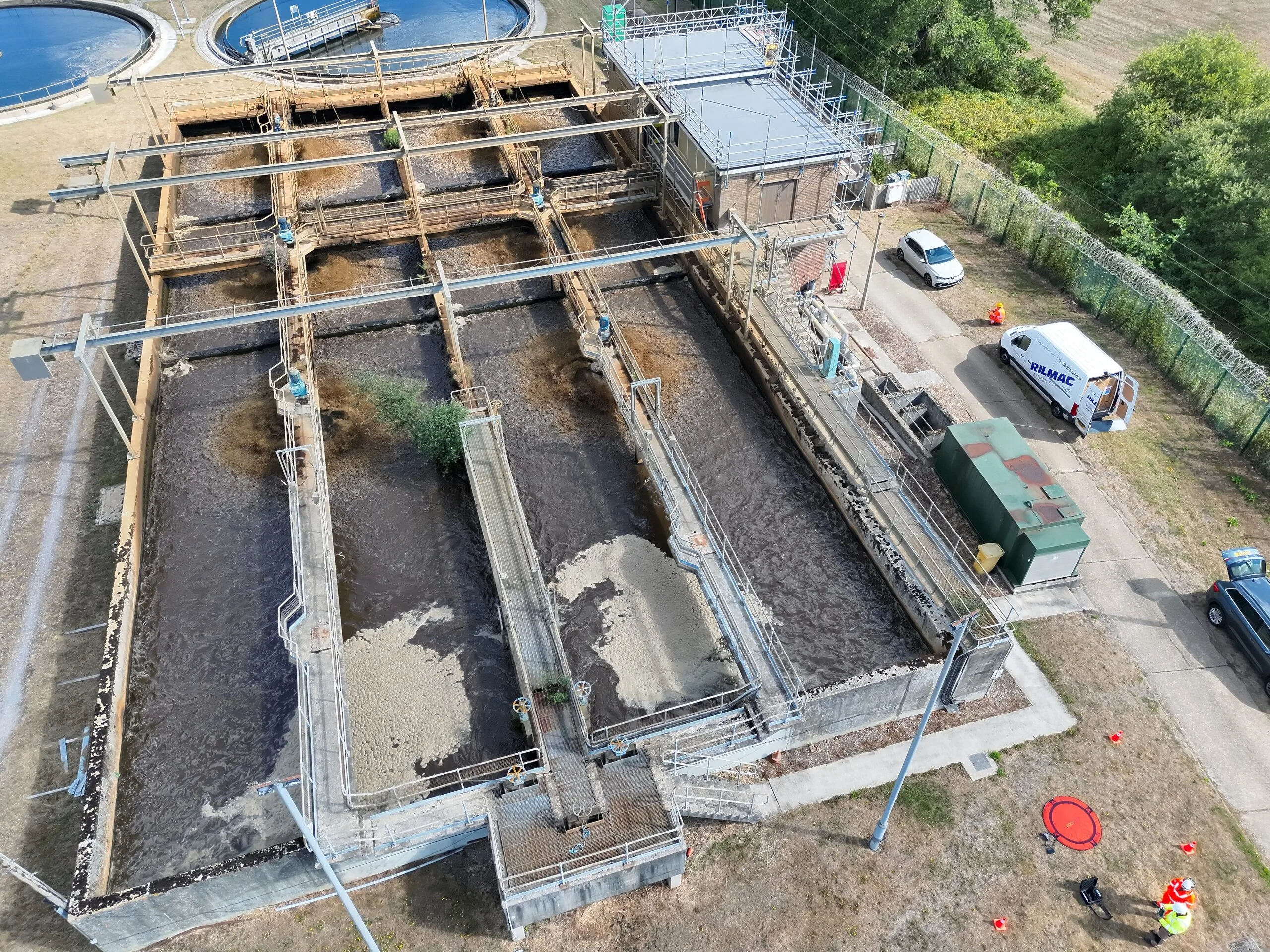
Working with Thames Water, Iprosurv deployed specialist drone technology to capture detailed visual inspection data from internal gantry cranes and external aeration tank crane structures, reducing the need for traditional access methods.
Inspection data delivered for
review within 24 hours,
with no asset downtime
required for drone data capture,
supporting safer, more efficient
statutory inspection workflows.
THE PROJECT AT A GLANCE
01 / THE PROBLEM
The Challenge
Statutory inspection programmes for internal and external gantry cranes at wastewater treatment facilities traditionally require difficult access, working at height and potentially costly disruption. Taking critical lifting equipment out of service can place additional pressure on other operational assets.
02 / THE SOLUTION
Our Approach
Iprosurv deployed the Flybotix ASIO X for internal gantry inspections and the DJI Matrice 4E for external cranes above aeration tanks. Both platforms enabled detailed visual data capture without requiring the assets to be taken out of service for the drone inspection.
03 / THE FINDING
The Evidence
High-resolution visual data provided information about the condition of difficult-to- access crane components, including critical areas and witness marks. Inspection data was delivered within 24 hours for review by the appropriate engineering specialists.
04 / THE VALUE
Why It Matters
No asset downtime for drone data capture, reduced reliance on scaffolding and elevated access, and less exposure to working-at-height risks. The approach supports efficient asset monitoring and more informed maintenance decisions alongside statutory inspection requirements.
03 | UNDERSTANDING THE CHALLENGE
When Taking an Asset Out of Service Creates More Problems Than the Inspection Itself
At wastewater treatment facilities, gantry cranes perform essential lifting operations, from moving heavy motors and pumps within buildings to handling equipment above aeration tanks.
Maintaining these assets is essential, but accessing them for inspection presents significant challenges. Internal gantries may be positioned high above operational equipment, while external cranes can operate over large bodies of water and hazardous treatment environments.
Conventional inspection methods may require scaffolding, mobile elevated work platforms or other specialist access arrangements. These introduce working-at-height risks, additional planning, equipment costs and potential disruption to normal operations.
The operational consequences can extend beyond the crane being inspected. When a lifting asset becomes unavailable, its workload may need to be transferred to other equipment, placing additional demand on the wider maintenance and operational programme.
Thames Water required an approach that could support its statutory lifting equipment inspection programme while reducing unnecessary access requirements. The objective was to obtain detailed visual information from internal and external crane structures without taking the assets out of service solely for drone data capture.
There was also a clear requirement for speed. Inspection information needed to be available within 24 hours, giving responsible engineers and competent persons timely evidence to review and determine whether further examination or maintenance was required.
The Right Drone for the Right Environment. Inspection Without Unnecessary Disruption.
The solution was not simply to replace traditional inspection methods with drone technology. It was to understand the operational environment, identify where aerial data capture could deliver real benefits and select the appropriate aircraft for each inspection requirement.
Thames Water's gantry cranes presented two very different operating environments. Internal cranes required inspection around complex steel structures, restricted spaces and areas where conventional satellite positioning could not be relied upon.
External cranes, including those positioned above aeration tanks, required detailed visual inspection from a safe distance, while accounting for the hazards and operational restrictions of an active wastewater treatment site.
Iprosurv developed a complementary inspection approach using the Flybotix ASIO X for internal gantry inspections and the DJI Matrice 4E for external structures. Each platform was selected for the conditions in which it would operate and the quality of visual data required by the inspection teams.
The approach also supported a more proactive asset management strategy. By establishing a baseline condition record and using repeatable imagery to monitor visible indicators such as witness marks, corrosion or component movement, the data could help engineers identify changes over time and determine where closer investigation was necessary.
01 / INTERNAL INSPECTIONS
Flybotix ASIO X: Accessing Complex Internal Structures
Deploy a protected, collision-tolerant inspection drone capable of operating in confined and GNSS-denied environments. The ASIO X enables detailed visual examination of elevated internal gantry structures and components while reducing the requirement for personnel to access difficult or hazardous locations.
02 / EXTERNAL INSPECTIONS
DJI Matrice 4E: High-Resolution External Asset Surveys
Use a professional enterprise drone to capture detailed imagery of external gantry cranes, including assets positioned above aeration tanks. High-resolution imaging and zoom capability enable inspection data to be collected from appropriate stand-off distances, reducing unnecessary proximity to structures and operational hazards.
03 / INSPECTION INTEGRATION
Repeatable Evidence for Condition Monitoring
Establish a structured visual inspection process that supports baseline assessments and subsequent condition reviews. Images of critical components, witness marks and visible deterioration provide engineers and competent persons with information to support maintenance planning, targeted investigation and statutory inspection activities.
The objective was not to replace the statutory responsibilities of a LOLER competent person. It was to make the inspection process safer, more efficient and less disruptive by providing detailed visual evidence from difficult-to-access structures. The resulting information could support competent-person assessments and condition monitoring, while reducing unnecessary working at height and helping Thames Water maintain operational continuity.
05 | OPERATIONAL DELIVERY
Two Inspection Environments. One Coordinated Approach. Data Within 24 Hours.
Inspecting critical lifting equipment at operational wastewater treatment facilities requires more than specialist drone technology. It demands careful planning, coordination with site personnel and an understanding of the hazards associated with complex industrial environments.
01
Site Planning and Operational Safety
Before deployment, Iprosurv coordinated inspection requirements with the site teams, identifying the assets and areas requiring visual review. Risk assessments and method statements addressed working machinery, restricted spaces, water hazards, metal interference and the movement of personnel.
Operators followed site-specific safety arrangements, including appropriate PPE, controlled operating areas and communication with the personnel responsible for the assets.
02
Internal and External Gantry Inspections
For internal gantry cranes, Iprosurv used the Flybotix ASIO X to collect imagery within complex structural environments where satellite positioning was unavailable or unreliable.
External gantry cranes, including those operating above aeration tanks, were inspected using the DJI Matrice 4E. Its imaging capabilities enabled detailed visual information to be captured from appropriate stand-off distances, reducing unnecessary proximity to industrial structures.
03
Data Delivery and Engineering Review
The inspection imagery was organised and made available within 24 hours, allowing the relevant teams to review the condition of the assets and identify areas requiring closer investigation.
Where baseline records and witness marks were available, imagery could also support comparison during subsequent inspections, helping maintenance teams monitor visible changes and plan targeted follow-up activities.
Detailed Inspection Evidence. Reduced Disruption. Better Asset Intelligence.
The Thames Water project demonstrated how professional drone technology can support the inspection of critical lifting equipment without the operational disruption typically associated with accessing difficult structures.
By combining the Flybotix ASIO X for internal gantry inspections with the DJI Matrice 4E for external crane structures, Iprosurv delivered detailed visual information within 24 hours, while avoiding the need to take lifting assets out of service solely for drone data capture.
The resulting evidence supported engineering reviews, condition monitoring and the identification of areas that might require further investigation.
01 / OPERATIONAL CONTINUITY
Keeping Critical Assets Available
Drone visual inspection removed the requirement to take the cranes out of service solely to capture inspection imagery. This reduced disruption to normal operational arrangements and avoided the need to transfer additional workloads to other lifting equipment for the data capture activity.
02 / PERSONNEL SAFETY
Reducing the Need to Work at Height
The use of specialist internal and external drones enabled imagery to be collected from elevated and difficult locations without requiring personnel to physically access those areas for the initial visual review. This reduced exposure to working-at-height and other site-specific access hazards.
03 / RAPID DATA DELIVERY
Inspection Information Within 24 Hours
High-quality visual inspection information was returned within 24 hours, giving responsible engineers and inspection teams timely access to imagery of the relevant crane structures and components. This supported prompt identification of areas requiring further attention.
04 / ASSET MANAGEMENT
Better Evidence for Ongoing Monitoring
The inspection imagery provided a digital condition reference that could support future comparisons. Visible indicators, including corrosion, witness marks and component movement, could be reviewed during subsequent inspections to help identify changes and inform maintenance planning.
24 Hours.
Less Disruption.
Less Disruption.
The value of the project was not simply the speed of inspection data delivery. It was the ability to gather detailed visual evidence from complex lifting assets while reducing unnecessary working-at-height exposure and avoiding shutdowns solely for drone image capture. The information could then support competent-person assessments, condition monitoring and better-informed maintenance decisions, without replacing statutory examination requirements.
07 | WHAT THE CLIENT RECEIVED
Detailed Visual Evidence. Accessible Within 24 Hours. Valuable Beyond the Inspection.
Iprosurv provided Thames Water with detailed visual inspection data from internal and external gantry crane structures, captured using two specialist drone platforms selected for their operating environments.
The Flybotix ASIO X enabled imagery to be collected from elevated internal crane structures, including locations where conventional access would present significant practical and safety challenges.
For external gantry cranes, including those positioned above aeration tanks, the DJI Matrice 4E provided high-resolution imagery of structural components and visible asset condition from appropriate stand-off distances.
The inspection information was made available within 24 hours, without requiring the lifting assets to be taken out of service solely for drone data capture. This gave the relevant engineering and inspection teams access to detailed imagery for review.
The resulting digital evidence could support the assessment of visible deterioration, corrosion, witness marks and other areas of concern. Where comparable inspection records are retained, the imagery can also provide a useful reference for monitoring changes in asset condition.
Importantly, this information supports the work of engineers and LOLER competent persons. Drone imagery does not, by itself, replace a statutory thorough examination or establish the continued safety of lifting equipment.
Thames Water received more than inspection photographs. Iprosurv delivered timely visual evidence from complex internal and external lifting structures, supporting informed condition assessments, reducing unnecessary physical access requirements and helping maintain operational continuity. The same approach offers opportunities for repeatable inspection and long-term asset condition monitoring across critical infrastructure.
Why Take Critical Assets Out of Service Just to Capture Inspection Data?
The Thames Water project demonstrated how specialist drone technology can support the inspection of complex lifting equipment while reducing unnecessary operational disruption and working-at-height risks.
By selecting the right technology for each operating environment, Iprosurv captured detailed visual information from internal gantry cranes and external lifting structures positioned above aeration tanks.
Inspection data was delivered within 24 hours, without requiring the assets to be taken out of service solely for drone data capture.
The opportunity extends well beyond individual inspections. For water companies, utilities, industrial facilities and infrastructure operators, repeatable drone inspections can support more proactive condition monitoring, maintenance planning and asset management.
Drone technology does not remove the need for statutory examinations by competent persons, but it can provide valuable supporting evidence, improve access to visual information and help focus specialist investigations where they are needed.
Whether you manage gantry cranes, processing equipment, industrial structures or other difficult-to-access assets, Iprosurv can help you explore more efficient ways to gather the information needed to make informed decisions.