
HIGH-RISE BUILDING SAFETY |
DRONE FACADE INSPECTION
When 25kg Insulation Panels Fall from Height: Drones Supporting High-Rise Building Safety
When external wall insulation panels weighing approximately 25kg began cracking and detaching from a 15-storey tower block in Leeds, the danger to residents and the public demanded urgent attention.
With more than 100 tower blocks in the wider housing portfolio, the local authority needed a faster, safer and more cost-effective way to assess visible defects and prioritise further investigation and remedial work.
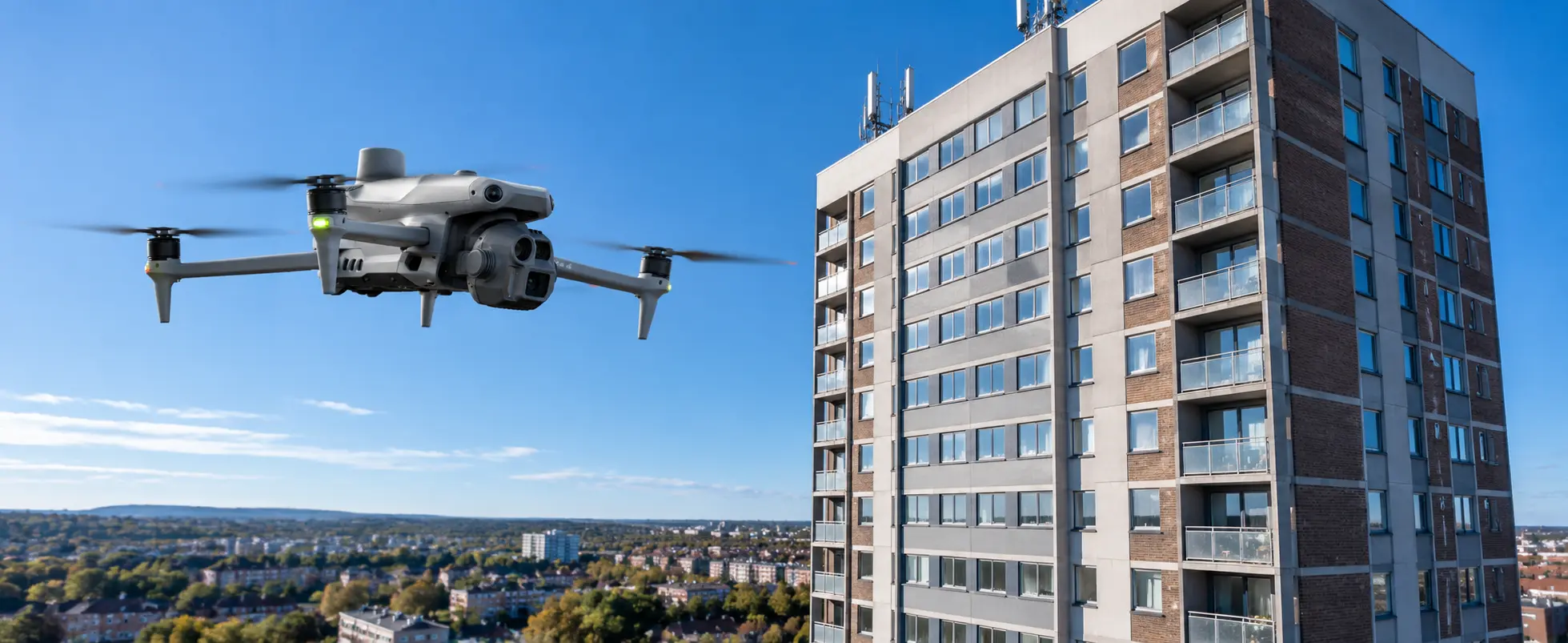
Iprosurv completed the inspection
process, including planning,
aerial data capture and reporting,
within 72 hours, providing
detailed digital evidence
to support building safety
and repair decisions.
THE PROJECT AT A GLANCE
01 / THE PROBLEM
The Challenge
External wall insulation panels weighing approximately 25kg were cracking and detaching from a 15-storey residential tower block, creating a serious risk to residents and the public. An urgent inspection was needed to establish the extent of visible defects.
02 / THE SOLUTION
Our Approach
Iprosurv used drone technology to carry out a detailed visual inspection of the building's external elevations, capturing imagery of the insulation system without the immediate need for scaffolding or specialist access platforms.
03 / THE FINDING
The Evidence
High-resolution aerial imagery provided a detailed visual record of the building facade, enabling areas of concern to be reviewed and supporting the identification and assessment of visible external wall defects.
04 / THE VALUE
Why It Matters
Inspection planning, aerial data capture and reporting were completed within 72 hours. The resulting evidence supported timely building safety decisions and demonstrated a scalable inspection approach for a wider portfolio of more than 100 tower blocks.
03 | UNDERSTANDING THE CHALLENGE
When Building Defects Become a Serious Public Safety Risk
The detachment of external wall insulation panels from a 15-storey residential tower block in Leeds presented an immediate concern for the local authority. With individual panels weighing approximately 25kg, falling materials posed a potentially serious risk to residents, visitors and members of the public around the building.
The challenge was to establish the extent of visible deterioration across the building's external elevations. Cracking, displacement and failing insulation components needed to be documented so that building specialists could assess the situation and determine appropriate next steps.
Inspecting a structure of this height using conventional methods could require scaffolding, mobile elevated work platforms or rope access specialists. Such approaches involve significant planning, access arrangements and working-at-height considerations, potentially delaying the initial assessment.
The issue also extended beyond one building. With more than 100 tower blocks in the wider housing portfolio, the authority needed to consider how similar inspections could be undertaken efficiently and consistently if concerns emerged elsewhere.
What was required was a rapid and practical method of gathering detailed visual evidence from height, reducing unnecessary exposure to risk while enabling qualified building professionals to make informed decisions about further investigation, safety measures and remediation.
Reaching the Unreachable: A Safer, Faster Approach to High-Rise Building Inspections
The immediate priority was to establish the extent of visible deterioration across the external wall insulation system without introducing additional risks associated with working at height. With potentially dangerous panels detaching from the building, a conventional access-led inspection presented significant practical challenges.
Iprosurv proposed a drone-based visual inspection that could systematically document the building's external elevations, capturing high-resolution imagery of areas that would otherwise require specialist access equipment. This provided a practical way to gather initial evidence rapidly while reducing the requirement for personnel to work at height.
The solution went beyond collecting individual photographs. By combining detailed aerial imagery with digital modelling and AI-assisted defect identification, the captured information could be organised into a digital record for specialist review, supporting the identification, location and assessment of visible defects across the facade.
Importantly, the approach also offered a repeatable inspection methodology. With more than 100 tower blocks in the wider housing portfolio, drone technology presented an opportunity to support consistent visual assessments, asset management and the prioritisation of future investigations.
01 / SAFER INSPECTION
Reduce Working at Height
Use drone technology to capture detailed imagery across the 15-storey building, reducing the immediate need for scaffolding, access platforms or rope access during the initial visual assessment. This enabled evidence gathering while limiting unnecessary exposure to height-related hazards.
02 / DIGITAL EVIDENCE
Create a Detailed Building Record
Capture high-resolution photographs and develop an interactive 3D model of the building. This provided a structured visual record for reviewing cracking, displacement and other visible facade defects, helping specialists identify areas requiring further investigation.
03 / SCALABLE INSPECTIONS
Support a Wider Building Portfolio
Establish a repeatable aerial inspection approach that could be applied to other high-rise buildings. For a housing portfolio containing more than 100 tower blocks, this offered a practical opportunity to improve inspection consistency, inform maintenance planning and prioritise resources.
The objective was not to replace structural engineers or specialist building investigations. It was to provide them with detailed, accessible visual evidence much earlier in the assessment process, allowing building owners to make more informed decisions about safety, further investigation and remedial works.
05 | OPERATIONAL DELIVERY
From Urgent Safety Concern to Detailed Inspection Evidence Within 72 Hours
With external wall insulation panels detaching from a 15-storey residential building, speed and accuracy were essential. Iprosurv delivered a coordinated inspection process, from initial planning through to detailed digital reporting, within just 72 hours.
01
Plan and Capture the Building Elevations
Iprosurv deployed experienced drone operators to inspect the building's external elevations, capturing thousands of high-resolution photographs across the facade. The survey documented visible defects, including areas of cracking and deterioration, without the immediate need to install scaffolding or deploy rope access teams.
02
Process the Data into an Interactive 3D Model
The captured imagery was processed into an interactive three-dimensional model of the tower block. Processing took approximately one day, allowing the housing association and other stakeholders to examine the building remotely. AI-assisted crack detection helped flag potential defects for further review.
03
Identify, Document and Report Areas of Concern
The inspection evidence was compiled into a detailed report identifying visible defects and their locations. This gave the housing association information to support specialist assessments, prioritise further investigations and plan appropriate remedial works.
From an Immediate Safety Concern to Actionable Building Intelligence
Within 72 hours, Iprosurv had completed the inspection process, providing detailed aerial imagery, an interactive 3D model and a record of visible defects across the tower block's external elevations.
The resulting information supported informed decisions about further investigation, public safety and remedial works, while demonstrating how drone inspections could help manage similar challenges across a larger housing portfolio.
01 / PUBLIC SAFETY
Earlier Identification of Potential Hazards
Detailed imagery provided a visual record of cracking, deterioration and other areas of concern across the external wall system. This supported earlier specialist review and helped inform decisions about further investigation and appropriate safety measures.
02 / OPERATIONAL EFFICIENCY
Inspection and Reporting Within 72 Hours
Planning, aerial data capture, processing and reporting were completed within 72 hours. The drone-based approach reduced reliance on immediate physical access at height for the initial visual assessment and enabled the inspection process to progress rapidly.
03 / INFORMED DECISIONS
Better Evidence for Remedial Planning
The interactive 3D model and defect imagery allowed building specialists to review visible areas of concern remotely. This provided a clearer evidence base for prioritising further investigation, targeted access and potential repair requirements.
04 / PORTFOLIO MANAGEMENT
A Repeatable Approach for High-Rise Assets
With more than 100 tower blocks in the wider housing portfolio, the inspection demonstrated the potential for a consistent, scalable approach to external building assessments, supporting maintenance planning and more effective allocation of inspection resources.
72 Hours.
Better Information.
Better Information.
The value of the inspection extended beyond the speed of delivery. By combining detailed aerial imagery, digital modelling and structured defect reporting, Iprosurv provided a practical evidence base to support building safety decisions, reduce unnecessary exposure to working-at-height risks and inform the next stages of investigation and repair.
07 | WHAT THE CLIENT RECEIVED
From Thousands of Photographs to Actionable Building Evidence
Iprosurv delivered more than a collection of aerial photographs. The project produced a comprehensive digital record of the 15-storey tower block, providing the client with detailed visual evidence of the external wall insulation system and areas of concern.
Thousands of high-resolution images were captured across the building's external elevations. These images formed the basis of an interactive 3D model, enabling building specialists to examine the facade remotely, navigate around the structure and investigate visible defects from multiple perspectives.
The inspection also incorporated AI-assisted crack identification to support the review of potential defects. Areas of cracking, deterioration and other visible concerns could be documented and located within the digital record, providing useful information for further specialist investigation.
The findings were brought together in a detailed inspection report, giving the client an organised evidence base to support discussions with building engineers, contractors and asset management teams.
Crucially, the digital information could be retained for future reference, supporting comparisons following repairs or subsequent inspections. The approach also demonstrated how similar digital records could be produced consistently across other high-rise assets.
The value of the delivery was not simply the volume of imagery collected. Iprosurv transformed thousands of photographs into an accessible digital record, enabling building specialists to review visible defects, prioritise further investigation and make more informed decisions about the safety and maintenance of a high-rise residential building.
When Building Safety Is at Risk, Can You Afford to Wait for the Inspection?
The 15-storey tower block inspection demonstrated how professional drone technology can help building owners respond to serious external wall safety concerns without relying solely on traditional access methods.
Within 72 hours, Iprosurv delivered a comprehensive digital record of the building, including high-resolution imagery, interactive 3D modelling and documented areas of concern.
This provided building specialists with the information needed to review visible defects, prioritise further investigation and support informed decisions about public safety and remedial works.
But the opportunity extends beyond emergency inspections. For housing associations, local authorities and organisations responsible for extensive property portfolios, drone technology offers a practical way to improve inspection efficiency, reduce unnecessary working at height and create consistent digital records of building condition.
Whether you manage a single high-rise building or hundreds of properties, Iprosurv can help you explore how drone inspection and digital data solutions could strengthen your asset management and maintenance strategy.