






How do Ground Control Points Work?
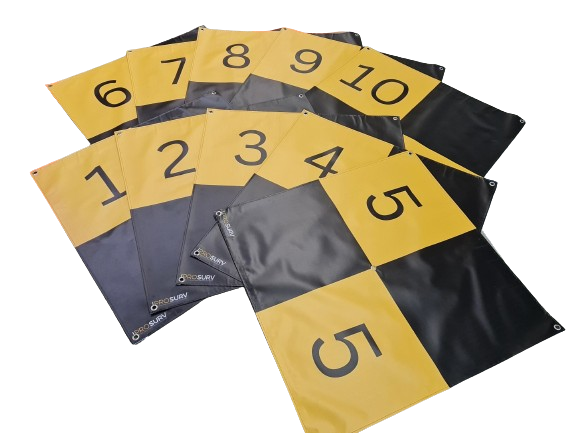
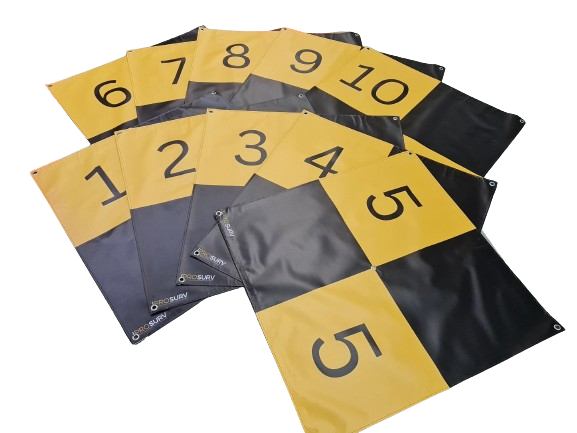
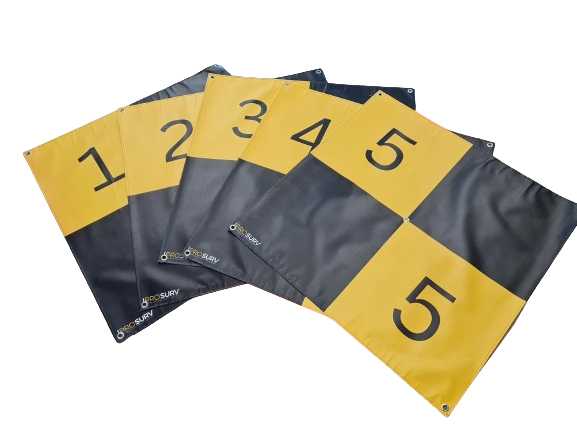
- Placement: GCPs are strategically placed across the survey area before the drone flight. They are typically distributed throughout the area of interest in a way that ensures good coverage and visibility from the air.
- Surveying: Each GCP is accurately surveyed using GPS (Global Positioning System) or other survey-grade equipment to determine its precise geographic coordinates (latitude, longitude, and sometimes elevation). This information is often recorded in a digital format.
- Aerial Survey: When the drone flies over the area, it captures images using its onboard camera(s). These images cover the entire survey area and include the GCPs.
- Image Processing: After the flight, the collected images are processed using specialized software for photogrammetry or image stitching. This software uses the visual information in the images to create detailed maps, orthomosaics, or 3D models of the surveyed area.
- Georeferencing: During the processing, the software uses the known coordinates of the GCPs to accurately georeference the resulting maps or models. This involves aligning the aerial imagery with real-world coordinates, greatly enhancing the accuracy of the final output.
- Quality Assurance: Once the processing is complete, the accuracy of the survey data is verified by comparing features in the output to the known locations of the GCPs. Any discrepancies can be corrected, and adjustments made as necessary to ensure the final product meets the required accuracy standards.